Showing posts with label superheroes. Show all posts

Monday, May 4, 2015

So I just finished Daredevil...

... and I didn't love it the same way that everyone else seems to. Or at the very least, NPR's Peter Sagal showered love on Daredevil on Twitter, while my nerd friends showered love on it on Facebook. I didn't check Pinterest or Instagram, but I'm sure there's love being showered on it there.

And there are things to love about Daredevil! I mean, I watched 13 episodes of my own free will--and very little of what kept me going was a sense of obligation. (Though there was that too.)

(Slight digression: Why is Drew Goddard credited as "creator"? There must be an agreement or a discussion that makes sense of that credit. Someone please explain that to me.)

Here's some of the things to love:

  • Vincent D'Onofrio's portrayal of a damaged Wilson Fisk, not yet the in-control Kingpin; 
  • the love of friends between Wesley/Fisk, Foggy/Matt;
  • some of the fight scenes.

And here's some of the things not to love:

  • repetitive and trite women and children in peril storylines; 
  • yet another Batman-ization of a character--the centralization of trauma;
  • most of the fight scenes;
  • so much empty talk.

To expand on trauma's central role in comic book characters: since the beginning of modern superheroes, creators have recognized that it takes a particular sort of person to put on a mask and hit people for justice. And often, that "particularity" takes the form of some trauma: the death of a loved one (Batman, Spiderman), exposure to some dangerous mutagen that might make normal life impossible (Fantastic Four, the Hulk).

Matt Murdoch, the Daredevil, gets a double dose of trauma in his origin story: blinded and granted heightened senses by exposure to some dangerous chemical, he also loses his father to gangsters. And yet, until Frank Miller took him over, Daredevil was something of a light-hearted character. (There was a running joke in the comics about how bad he was at keeping his secret identity, since he kept revealing himself to pretty women.)

And yes, Frank Miller did grim and gritty for Daredevil, which made a lot of sense: a street-level character dealing with police corruption and inner-city violence. (Hell's Kitchen also made a lot more sense back then. These days, every time someone in the tv show talked about how bad Hell's Kitchen was, I had to stop myself from laughing. It's the double-edged sword of Marvel using the real-world as a setting: they get the benefit and disadvantage of instant recognition.)

So the creators of the show could have pointed to Daredevil's history as a reason for either way they wanted to go: cartoony and fun or dark and heavy. No money for guessing what they did.

The problem with that, for me, isn't that I'm fatigued with grim-gritty superheroes. The problem for me is that, about half the time, they did grim-gritty in a predictable and boring way. For instance, in the opening scene Matt Murdoch talks to his priest:
"I'm not seeking penance for what I've done, Father. I'm asking for forgiveness... for what I'm about to do."
Not a bad line, unless you saw it coming from a mile away. And that sense of grimness such suffuses so much of the show, from the acting (so much heavy pauses in the speaking, as if the weight... of what you were saying... was exhausting), to the fight scenes (so many of which were muddily lit, robbing them of any excitement).

I could go on, but I want to end with just one comment on the role of women. Matt Murdoch is motivated, in part, by his father issues. (Get it--he starts the show by talking to a priest because he has father issues. Wah-wah.) Which would be fine change from being motivated by protecting women--except there's no hint of his mom at all. As if Matt sprung fully forth from Jack Murdoch's forehead.

Besides that glaring omission, we could go through the women in the show and their relation to the men, particularly Matt. The tally isn't so great. Sure, Karen Page (secretary) and Claire Temple (nurse) get at least one moment of revenge or beating someone up. (Heck, even Foggy gets one moment of beating someone up.) But most of the time, the women are objects of rescue: Karen, Claire, Vanessa (an object of rescue not for Matt, but for Fisk).

Oh god, and I didn't even get into the 80s-esque racial/crime components, particularly the inscrutable Asian gangs: the honorable Japanese ninjas (which are so Frank Miller), and the secretive Chinese drug-runners.

In short, I didn't hate the show, but it seems to have some really apparent problems and some missed opportunities.
Monday, December 29, 2014

Marvel's Agents of SHIELD, season one

The short version response: I'm not sure I'll watch the second season.

I was one of the people who was pretty excited by Marvel's Agents of SHIELD before it showed and pretty underwhelmed by the first few episodes. So I've only gotten around to watching the first season now, after I heard some reports that it really shaped up with some Whedon-esque twists later.

Uh, well, I'm glad that some people like it.

Now, I really don't want to perform hate on a bit of popular culture because (a) it's not really worth it and (b) it's really hard to make anything, let alone make anything good.

So, what's the good lesson to take from this show? The big lesson is: don't hide your light under a bushel. Or, more concretely: if there's something that makes your work interesting, don't hide it under a long setup. As the discussants at Writing Excuses have said several times--even using Agents of SHIELD as an example!--if you're writing a revolutionary take on epic fantasy but only reveal the twist in the last chapter after writing the whole book as straightforward fantasy, you will have effectively (a) driven off the people who are interested in revolutionary takes and (b) disappointed the fans of straightforward fantasy who stayed with you.

In SHIELD's case, the big twist that really energized the show (somewhat) in the second half was the revelation that SHIELD was infiltrated by Hydra, which was tied into the second Captain America film. Even a hater like me can see some logic to holding off on that reveal, both logistical (the show needs to start with the regular season of shows, but the movie only comes out later); and artistic (the big betrayals will have more punch if we see everyone pretending to be good at first).

But, oh god, if you're making a show about, say, how a 1960s ad man is really sleazy, you don't do 10 episodes of normal ad life and then show him cheating on his wife in episode 11. You end episode one with that revelation.

Or, let's take Hitchcock's famous dictum: a bomb goes off at a table and blows up two guys--how surprising! That's good and sometimes good enough if all you want is a sudden, sharp surprise. But if you show the bomb and then show the two guys talking normally--suspense!

So, if I were doing a SHIELD show (which is unlikely on a hundred different levels, but go with me), I wouldn't burn 13 episodes of mostly blah adventures, building up pretty cliche characters and pretty cliche characters' relationships. Instead of having bland adventure guy and bland hacker girl build up a relationship only to reveal the secrets, I'd much rather show bland adventure guy's secrets from the get go. That way, viewers could spend the time realizing that bland adventure guy's blandness is a put-on.

I could point out some other issues (like that time that some guy gets magically killed over the phone, when the guy on the other end turns out not to be at all super-powered), but the second biggest lesson to take away here is be interesting. That's a little vague, but the show leaned heavily into some cliches, from "He's standing right behind me" to action-movie-style quips in the most inappropriate places.

Let's just all agree to write that on a card and put it over our computers: BE INTERESTING.

Monday, July 28, 2014

Midway through Arrow, season 1

When I went to a Nerdist Writer's Panel, Moira Kirkland, who works on Arrow, said something along the lines of, "Well, it's on the CW, so no matter what else is going on, our main characters have to go to a party in the third act." Which got a big laugh AND is also pretty accurate to what I've seen. Mostly, I watch the show at the gym.

I'll say this for it: Arrow makes very motivating gym watching. (It's right up there with Kacy Catanzaro's qualifying run for American Ninja Warrior.)

Before I watched an episode, I heard that Arrow was good, though a little heavy on cheesecake. To be fair, the cheesecake was a little more even-handed than usual, with Stephen Amell (Oliver Queen) sharing top-billing with his abs. Also, given the fact that WB/DC haven't had any luck with anything but the Christopher Nolan Batman movies--and the general success of more mopey YA literature--it's no surprise that this version of Oliver Queen/Green Arrow is awfully po-faced a lot of the time. Has he always been so emo?

(Also, it's funny to me to see so many actors who I recognize from other beloved and often short-lived nerdy tv shows. I'm curious to what extent casting for these roles is about getting a person that the audience will already recognize.)

But all that to the side, I'm surprised by how interesting and fun the show is. Who knew that a superheroic riff on Robin Hood would have such staying power? Of course, that's part of the appeal today: when we in our own world have to deal with massive inequality, the idea of a rich kid going after the criminal wealthy has a certain obvious resonance.

The Batmanization of Oliver also has some clear appeal, since so much of the story revolves around family issues: Oliver lost his dad and is dealing with a mother with secrets and a younger sister with issues; his best friend has trouble with his dad; his ex-girlfriend has issues with her mom and dad, etc., etc. Very smartly, all of these individual problems are interwoven; for instance, Laurel Lance's dad is a cop, so in addition to their family issues, both of them have issues with Oliver Queen AND with the Hood.

(Though I should add that I'm especially a fan of family complication stories. For instance, Smallville was not a great show by any measure, but every time Clark and his father had a heart-to-heart about their relationship, I sat up.)

So we have universal family problems, plus contemporary issues.

And some mystery. Rather than just give Oliver Queen a mind-altering exile on an island, the show has wisely made the island a big part of the story. Call this the "Lost-ization" of the show: while Oliver's life as superhero of Starling City goes on, we sometimes get stories of what happened to him on the island and what he did. Which nicely combines the pleasures of the origin story (watching a soft rich kid learn about the hard things) with the pleasure of a superhero quest/mystery story (where Oliver tries to clean up the city).

Also: there's always some big party with pretty people. So there's that going for Arrow as well.

Wednesday, June 4, 2014

Man of Dumb; or, How to Wreck a Franchise While Making Lots of Money

Yes, it made $668m on a $225m budget; and yes, there will be a sequel to Man of Steel (2013), which all sounds pretty good...

Until you realize that Avengers made $1.5 TRILLION on a $220m budget. Sure, Avengers had an extra year to make that money, but do you think Man of Steel is going to nearly triple its take in one more year? Or how's this for shaming: Amazing Spider-Man (2012) cost $230 and made $752m. Confining ourselves to 2013, Man of Steel made less than Gravity, it made less then Monsters University, it made less than Fast and Furious 6.

I'm sure the makers of Man of Steel are very happy to nearly triple their budget; and I don't think immediate box office is the be-all and end-all of judging a movie; but I just wanted to give some context to how well this movie did--and how well it could have done if it had been a good movie.

Because Man of Steel is a bad, dumb pointless film. There are so many bad choices made in the film that it would take too long to enumerate and describe them all. I'm sure, for each person who saw it, a different set of problems would stick out. So I won't talk about everything I thought was off, but here's a few things I noticed:

a) As many people have noted, the tone is dour, the color palette is dark, and the overall feeling is so grim. You can do grim Superman--he's the only child of a doomed planet, so sure, there's grimness there. But it's so unrelentingly grim that it basically comes off as trying too hard.

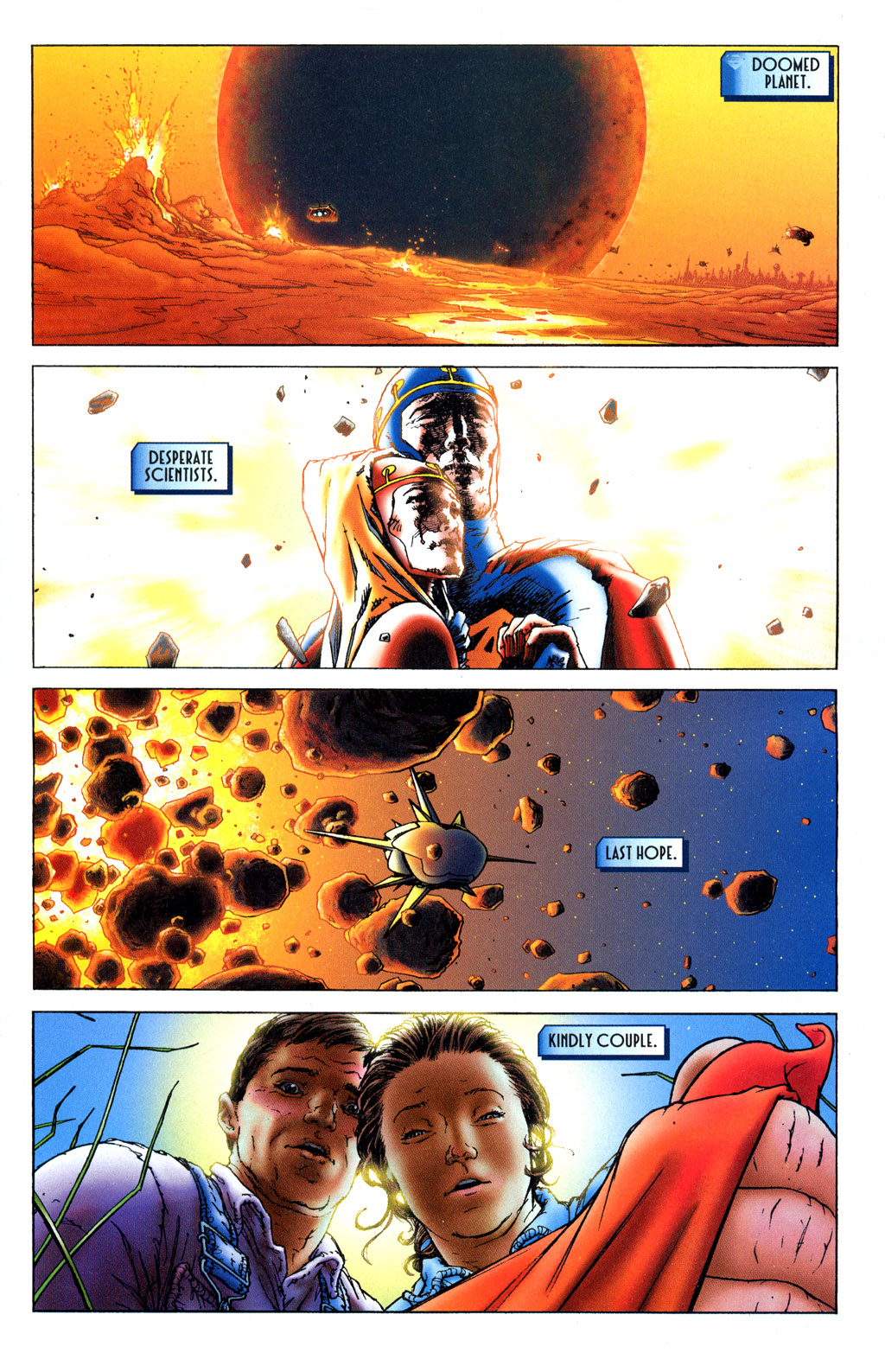
b) Did we really need to spend so much time rehashing everything from his backstory? Guardians of the Galaxy may have to stop the story to explain who these characters are, but Superman's origin can be told in four panels.

c) Just as an example of the bad scene construction, there's a scene where Clark finds an alien ship and he's about to stick his key into the ignition (basically), there's a robot protector behind him that he can't see. Oh no! Wait, what? See, it's shot as if we should be worried about what will happen to Clark, but (a) we don't know that the floating thing is a protector who will attack Clark; and (b) we don't know that putting in the key will turn off the robot. So basically we have a moment where Clark wants to do something, but what, why, and who opposes him?

cSub1) Which reminds me of another dumb move: when Zod's forces go to grab Kal's escape pod, one of them crashes into the barn to find it--and there it is. Did the Kents not try to hide it? As we learn when the evil Kryptonian leaves the barn, the escape pod was hidden in the basement. But by not showing us that first, the first impression is just that the Kents didn't hide the escape pod.

d) The big crisis for Clark seems to be whether he'll choose Krypton or Earth. Or maybe that's not the crisis, because, seriously, who expects Clark to choose to join with Zod--especially after Zod shows him the skull-strewn future? There's one moment where Zod tells Clark that he's destroying Krypton by destroying this one ship--and Clark does it, which seems like a big decision. And then the film goes on and on, with him having to fight Zod again to choose humans over Kryptonians. Blah. How many times are they going to make us watch dumb fights that all prove the same theme?

All that said, I want to highlight one moment at the end that I liked: when Clark comes to the Daily Planet as mild-mannered reporter, he meets Lois Lane, who knows his secret; and she gives a little smile and says, "Welcome to the planet." And that is just about the only humor in the whole movie.

Friday, May 9, 2014

The brilliance and boringness of Hawkeye

Matt Fraction's Hawkeye is the sort of comic book that everyone in comics is talking about. It's a superhero comic book--sort of. As the opening lines to each issue tells us, Hawkeye is the non-powered, sharpshooter for the Avengers, and this is what he does when he's not doing Avenger-y things.

As people have pointed out, Hawkeye is less about the wish fulfillment that goes with superheroes, than he is about something like wish bafflement. He's a normal guy, who happens to have a barely epic skill--sharpshooting--whose weapon of choice is the bow and arrow, and who has some trick arrows. (But not like the really awesome toys and gadgets of Batman. Hawkeye is a working-class or low-class character, without any of the Richie Rich fantasies of a Batman or even a Green Arrow.) Who would ever want to be Hawkeye?

Hawkeye may be a hero when he's with the Avengers, but when he's off the clock, we see him as a guy with problems, both emotional and physical. It's the kind of side-story that gains resonance and is only possible as a side story to other stories going on elsewhere. It's like the first "Blink" episode of Doctor Who, where the Doctor is involved in other adventures just on the periphery of the episode; or "The Zeppo" episode of Buffy the Vampire Slayer: because we know what sort of stories are going on off-page, this comic can feel free to go off the usual path.

And it really does, in some great ways. The first issue, for instance, shows Hawkeye dealing with some unscrupulous landlords, who happen to be Eastern European gangsters who wear tracksuits all the time and say "bro" most of the time. (In an interview, Fraction notes that the "bro" joke came out of the fact that we don't really care what the mooks say in a gang fight: we know they're just going to threaten Hawkeye and we know that they're not going to win.) Fraction plays with time here, flipping back and forth between the aftermath of the adventure and how Hawkeye gets involved, which is mostly interesting for how great the transitions are.

For another example of the fireworks brilliance of Hawkeye, there's issue #11, which tells the whole story from the POV of the dog that Hawkeye has adopted. There's a Far Side-level joke where the dog can't understand anything people say except for certain words: "bad dog," "pizza," etc. There's a Chris Ware-esque iconography as the dog smells certain things in certain places. And there's even some advancement of the plot as we see Hawkeye and his brother and Hawkeye's young partner/replacement (also known as Hawkeye).

But for all the critical acclaim of this comic and of issue #11--it's up for and I think will win the 2014 Eisner for best single issue--there's something a little too clever, sometimes, particularly when it comes to time games. I've already mentioned how #1 jumps back and forth, which is fun, and a nice statement of how Fraction will do things differently here. But does it add much? Similarly, issue #6 plays with time, covering several out-of-order days in the lackluster life of a guy with issues; but that out-of-orderness feels like a dodge, a way to gussy up something that isn't very interesting. I can kind of stretch and say that Clint Barton has trouble with cause-and-effect--he hovers between loveable rogue and ne'er-do-well, making people's lives more complicated rather than better--and so that's why the story is told out-of-order. But it feels like a stretch.

And while "Blink" and "The Zeppo" were fun single issue stories parallel to a whole other story, Hawkeye has some trouble as an ongoing comic--which is probably why several of the later issues ditch Clint entirely and follow his protege as she makes a way for herself in L.A.

Friday, May 2, 2014

Get Shorty vs. Wanted

By now I hope you'd have faith that I could use enough tortured logic to connect these two films: one, a mobbed-up showbiz comedy about a loan shark following the money when he really would rather be in the movie business; the other about a sad-sack office drone who discovers he's really one of the secret masters/caretakers of the world and then discovers that the group is really villainous. One is from a book by Elmore Leonard, one of the masters of the underworld comedy; the other is from a comic book written by Mark Miller, an author who has rapidly fallen down the hole of self-parody and empty spectacle at the best of times. (At the worst of times, his spectacle is actually reprehensible rather than empty.)

So, two radically different films that are connected by... the fact that I watched them both this week. Sure, we could notice other similarities and telling differences: both Chili Palmer (Get Shorty) and Wesley Gibson (Wanted) are people in new worlds, with Chili learning about the high life and low-lives of Hollywood and Wesley learning about the secret assassin conspiracy that keeps the world balanced. And maybe each has some bit of moral ambiguity, with bad people who might be good.

But really, what sets them apart is more interesting and more instructive. Get Shorty is fun and funny, with well-structured transitions between scenes; Wanted is an adenoidal mess, that revels in disconnected and dumb set-pieces--train crash, car flipping assassination, naked Angelina Jolie--rather than giving us any character or reason to care. The humor of Wanted is spiteful in those few scenes that could actually be said to be funny, which results in that oddest of combinations: the popcorn spectacle that takes itself too seriously.

And worse than all that: it's boring.

Part of that boredom is baked into the premise, if you're a nihilistic jerkoff: Wesley Gibson is a sad-sack loser who has to learn that he matters and also where he comes from--which means that his triumph looks a lot like beating up other people and getting awesome revenge, bro, because he matters. And so the movie moves predictably through the numbers: Wesley is victimized, Wesley learns the truth, Wesley won't take it anymore, blah blah blah. It's the cinematic equivalent of a toddler throwing a tantrum: I MATTER! Sure, fine, but you're not the only one.

Whereas Get Shorty particularly excels because everyone is given their moment in the spotlight. Sure, some people are dumb, some are venal, some are violent--but they all come across like real people. In fact, Chili Palmer's secret weapon is that he cares about people: he'll get a tip from a "widow" because he's a good guy, he'll get extra help from a stuntman-turned-enforcer-and-dad by treating him like a human being, etc.

So in a way, Chili Palmer succeeds for the same reason that Get Shorty succeeds: because he and it accepts that other people matter, too.

Friday, April 18, 2014

Captain America 2, fourth (and hopefully final) thoughts

As an action film, Captain America 2 was... OK. This is really the make-or-break aspect for a film like this. (That and box office--and I think the film is doing fine at the box office. We saw it on opening day at 2:40 and the theater was pretty packed, though not sold out.) And it delivers on a few scales. Let's try to break this down (because I love breaking things down. Not such a fan of putting things together afterward. Oh well).

Was the action exciting as action? Sure. It was fun to see an old-fashioned car chase and a brawl in an elevator and so on. I especially thought it was smart to keep the action sort of low-key: when it's just Captain punching a guy, we don't wonder why they don't call in Thor and everyone else on the Avengers. That said, my girlfriend thought that some of the action scenes went on a little long, and I have to agree, because--

Was the action exciting as story? Not really always. In fact, the action almost always was spectacle that didn't move the story forward and had no more narrative weight than "Will Captain defeat his enemy?" The most interesting fight scene occurred with the Winter Soldier, but almost everything else was clearing the level to get to the boss. And when the fight is between Black Widow and Robert Redford, well, la, you'll excuse me for checking my watch. (In fact, I keep thinking how much more awesome and fun it would've been if the SHIELD council had actually done something to save themselves. No offense, but in a film where we see how fallible the institution is, what sort of message does it send to make us normal people wait for the superheroes to save us?)

Was there anything that slowed down the action? For me, the film has a lot of "people staring out windows giving big speeches" moments. It might only have two of those scenes, but they stick out like a sore thumb to me. When there's nothing happening on the screen and all the info is being delivered verbally, I feel like we might as well have a flashing light declaring this "Theme discussion" or "Background exposition." In a film that has a bunch of clever and well-done scenes, these few hiccups stick out.

Uh, well, I thought I had more issues to break down, but now I'm not so sure. So, after all those posts, I would probably sum up Captain America 2 by saying that it was mistitled in the subtitle: the Winter Soldier is such a minor part of the story, though he is the best and most interesting. It was fun, but not as exhilarating as the first Captain America. And not as topical and interesting as it could be.

Wednesday, April 16, 2014

Captain America 2, third thoughts

Previously on this blog:

  • Everyone seems to love Captain America 2.
  • It hits Captain's melancholy hard.
  • It doesn't really play with paranoia, political thrills, or surprise in any meaningful way.
  • It doesn't really have anything serious to say about contemporary issues.
(Oh, I forgot to mention another big-swing-and-a-miss surprise, which is the putative death of Nick Fury. Yeah, I don't think they're going to kill Nick Fury--at least, not outside of an Avengers movie.)

In a way, the last was the most disappointing. Learning that SHIELD was actually sheltering a secret cabal of Hydra deflected all of the serious ethical issues that we have. Which is fine for an action movie--maybe in a movie about a super-soldier who always does the right thing, you don't want to say "sometimes our military-security complex makes the wrong decision." But the way that this film puts all the blame on Hydra makes the moral issues more melodrama than drama. Particularly in a movie featuring lots of shoot-outs in crowded areas, this "the bad guys do bad things, the good guys are always good" morality rang as hollowly as a fist on Captain's shield.

So, Captain America 2 was a serious film when it looked at Steve Rogers's sadness and out-of-time quality; but it undercut that when it portrayed his enemies as completely evil and (worse) dumb. So, how was it as an action film?

Monday, April 14, 2014

Captain America 2, second thoughts

Captain America 2 takes Captain America, removes his clear enemies (Nazis, Hydra, Chitauri), and emphasizes how he's all alone, out of his own time. (The Avengers did the out-of-time shtick more superficially and amusingly, emphasizing that Steve Rogers doesn't know popular movies or that he's the subject of collectible cards.) This ramps up the uncertainty... or at least it should.

But when a film casts Robert Redford as a previously unknown but powerful character, and when we suspect that someone is really a traitor, it's like when Law & Order has a famous person: we know who the bad guy is. Similarly, when Captain America is alone romantically and ends up kissing Scarlett Johansson, I don't really wonder if maybe they'll become an item; or when Captain America attempts to reform his friend-turned-brainwashed killer, there's not much anxiety about whether it'll work.

So while Captain America 2 poses itself as something of a paranoiac political thriller, dealing with contemporary issues of the security state and over-surveillance and big data, it doesn't really land any of those punches. Critics and friends lauded that commentary on contemporary issues, but it felt pretty flat to me: "How much is security worth?" is an interesting question. "Can we morally kill an innocent if our big data analysis says this person will be a problem?" is a less interesting question. "Can we sacrifice freedom if it insures security--and, oh yeah, Hydra will be in charge?" isn't even a question at all--it's a call to arms.

Part of the failure of this film for me is encapsulated in the hostile takeover of SHIELD headquarters during the launch of the three new super-helicarriers: if your super-secret society is a few minutes away from taking over control through manipulation and subterfuge, why bring out the guys with the guns? Instead of ramping up tension, all that does is replace uncertainty with certainty. Which turns paranoia into a boxing match and clears up any problems that Captain had. After all, more than friends, Captain America needs a clear enemy.

Friday, April 11, 2014

Captain America 2, first thoughts

I don't know what to say, other than the obvious: there will be spoilers, so advance at your own risk.

Captain America 2: The Winter Soldier has been getting almost universally good reviews, both from professional reviewers and (especially) from people on my Twitter feed. And I just don't know what to say. Well, let's start at the beginning: what do we expect from a Captain America movie?
  • There's going to be a lot of action.
  • There's going to be some man-out-of-time issues.
  • Noble and potentially sacrificial actions.
  • Nazis.
Well, no, maybe not that last: after the first movie (and after Avengers) we know that Captain America is in the present day--which is why there's more man-out-of-time issues and fewer Nazis. Which is kind of a problem, I think.

That is, putting Captain America in the modern day means we're going to have more melancholy and lost identity issues: Captain America has no family, no friends, and no clear enemies. He doesn't even have a shared pop culture storebank. He's literally a museum piece in the sequel, when he goes to the Captain America exhibit at the Smithsonian--which was a slight lull in the action, but a clever way to remind people of the first movie.

Another excellent scene saw Captain America going to visit the somewhat senile Peggy Carter, as a further reminder that he is alone, and potentially living in the past. This is something that we don't necessarily expect from a Captain America movie: melancholy. In the first movie, he may be disappointed with his role, but he's always sure of his place in the larger society. In The Avengers, there's some hints about how he no longer fits so easily, no longer is sure of the rightness of his side.

Captain America 2 takes this idea and turns it up: fewer Nazis and/therefore more uncertainty. Does it work?

Friday, December 20, 2013

What's right/wrong with Constantine (2005) and what can we learn?

Constantine is not a terrible film, but it's very mixed. As it fits one of my favorite genres--urban fantasy, where magic is a small part of our real Earth--I think it's worthwhile looking at Constantine to see what it does right and what went wrong as a movie. There's probably more, but here's some loose thoughts. (And apologies for some of the cutesy names. I was looking at TV Tropes recently)

Right:

  • Some of the exposition/background occurs in dialogue that overlaps with some plot-related moment
  • Salvation by suicide: turning a lot of what we expect around, the movie delivers an ending where Satan saves the day and John's embrace of suicide turns out to be OK--since it was for right reasons--it's theologically shaky, but a good surprise/repay of the opening
  • Casting: Peter Stormare makes an engaging and creepy Satan and Tilda Swinton should be in all the movies

Wrong:

  • Much of the exposition/background is given with dialogue that is pretty bland or outright campy (as when Angela pushes aside info on "the Spear of Destiny" with "I know, I'm Catholic")
  • Opening title card tells us, as boringly as possible, some backstory on that Spear: blah blah, lost since WWII--but how much cooler it would have been if some guy just found this old spear wrapped in a Nazi flag and we had that mystery about what it was rather than that answer?
  • Too cool as a rule: there's a thin line between being a jaded demon-fighter and having the dry cool wit of an action hero (as the Simpsons parody of that style goes)--and John Constantine mostly comes off as a rote action hero
  • A Q for every hero: So much of the battles here are purely super-weapon vs. demon, which decreases suspense--so that many of the battle scenes have no emotional tension (not even the suspense of "how will he get out of this?"--we know how he'll get out of this, we've seen the flamethrower)
    • Scene without tension: when John faces a room full of half-demons, one of them helpfully says "Holy water" before they all start burning and then Constantine starts shooting, which looks OK, but has no emotional weight
  • Repetition: Characters occasionally tell each other things that we the audience already know; once, John uses a magic means to watch the prologue of the movie that we already saw--which is important for him to know, but boring for us to watch
  • Didn't we see that already?: In a climactic scene, two guys join forces to exorcise a woman. Sure, lots of exorcisms look the same, but why invite the comparison with The Exorcist?
  • That final message from Constantine about god having a plan; and that post-credit scene where Chas is/was a half-angel--both overwrought
  • Casting: Keanu Reeves does a nice "Zen blankness" (as one critic noted), but isn't quite right for the jerkiness of this character
  • Occult inconsistency: We're told that God and Lucifer aren't allowed on Earth, but half-breeds can intervene, so then what is Tilda Swinton's Gabriel and Gavin Rossdale's Balthazar? And the end, when Satan shows up?
  • Character motivation hard to connect to: Constantine has a clear, but odd goal: as a suicide, he's doomed to go to Hell, so he tries to please God by sending demons to Hell... which means that Hell would be full of people who hate him. Given that Constantine can be part of the battle, if his motivation is pure self-interest, why isn't he fighting for Satan, so that his arrival in Hell would be a home-coming? And while the movie has a fine arc for John of self-interest (get me to Heaven) to other-interest (save Angela and her twin sister), I feel like they try to get our interest in him by making him cool rather than making him human/identifiable.
  • Do we need him here?: Constantine's ally Chas disappears for a good chunk of the movie. So why is he here--along with Constantine's other allies, Angela, Beeman, Hennessy, Midnite? (Alt question: who isn't on Constantine's side?)
  • Sudden but inevitable betrayal: we hear that Mammon needs Godly help to get to Earth, which is one piece that sets up Gabriel's heel-turn (or reveal as a villain if you don't like wrestling lingo). But there's no real heft to that betrayal/position?
So, overall, I think Constantine's problems really have to do with the delivery of information about this strange world--it's at its best when it can dramatize that info; and with the strangeness of characters within that milieu (i.e., what does John Constantine want?).

Friday, December 13, 2013

Why "Thor" is a better movie than "Thor 2"

There's a lot of pressure on sequels and people have a lot of ready-made b.s. to unload. I understand the idea that the sequel has to live up to the first in some way--while also not simply recycling what worked about the first. But there's that attitude that the sequel is destined to be crap because it's just a naked cash grab--that makes very little sense. What was the first, just done for some altruistic reason other than cash?

That said, I went into Thor: The Dark World with no pre-made animus against sequels and franchises, and just a hope that it would continue the fun and interesting work done in the other Marvel movies. (What are we at now? This was the eighth movie in the Marvel Cinematic Universe. That's a lot of baggage to carry--though less once you realize that the second movie was Norton's Hulk movie.)

This being a professional work of craft, there are a lot of things that went perfectly right or that can't really be complained about. So: things are pretty, both real things--they had a credit for a leatherworker--and not real things, like dark elf spacecraft. And the acting is good. (Also, I saw someone complain that there wasn't a personal touch in the film, but except for Whedony dialogue in The Avengers and Shane Blacky dialogue in Iron Man 3, I'm not sure what sort of overt personal touch there is in many of the other movies. So that seems like a critique that hasn't quite had time to bake.)

That said, the story isn't very interesting, starting (as these things so often do) with the antagonist: Malekith. So the dark elves lived before the universe and want to plunge it back into nothingness. At the same time, the dark elves live on one of the nine realms that exists in the universe. I can get past weirdness like that (there's a way to reconcile that), but we still have a really big goal (destroy everything) with a very abstract drive (I am king of nothing). It's a very unengaging villain goal.

Which is probably why Thor 2 is set up so that much of Thor's conflict is with his dad, which is pretty ho-hum and a bit of a replay from the first movie. Sure, dad now approves of his son but disapproves of his son's love life (as opposed to the first, where he disapproved of both). And there's some argle-bargle about how Odin is acting so bad that he's as bad as Malekith. Wait, the guy who wants to protect his realm is as bad as the guy who would sacrifice everyone in order to end the universe?

Once again, the best parts of the movie center on Thor and Loki and Loki's confused status: he's a giant, but he's also an Asgardian; he's beloved by his mother but less so by his father; he wants power and respect, but what would he actually do if he had either?

Monday, December 9, 2013

Retro-future or just retro-retro: very vague thoughts on The Rocketeer

Why does The Rocketeer work? Wait, does The Rocketeer work? I've only seen it two-three times; and I see that it barely made back its investment in domestic box office (and hardly did more internationally). But I think if you released it now, people would be a lot more interested in the Art Deco-design. And maybe Disney might market it under a slightly different label so people don't think it's a kid film.

But no matter how poorly it did, it's a fun, light-hearted movie, even though it involves Nazis and gangsters and men down on their luck. How did it do that? Part of the issue is that no one is just waiting around for the protagonist to fix everything. Part of what makes it work is that the main characters have multiple, conflicting desires--even if those are pretty ordinary desires (usually career success/romantic success--and who can't identify with that?).

And as wacky as it is--Nazis! gangsters! Howard Hughes!--it keeps pretty close and simple at first and only builds to that wackiness. It's a very easy film to watch, since the world is totally normal at first and only slowly spins away from what we know.

Monday, December 2, 2013

Lessons from odd places: The Tick (2001)

I was a huge fan of the 1994 animated series The Tick, starring an obtuse, nigh invulnerable superhero named the Tick, who had no particular tick-related abilities besides his antennae. He was partnered with sad sack ex-accountant Arthur--who dressed in a moth suit that was continually mistaken for a bunny costume; and had several parody superhero friends, including American Maid and Der Fledermaus. When I was in high school, this show really hit hard with its evisceration of superhero tropes. For instance, when the Tick attacks a group of villains called The Idea Men, he asks them what the big scheme is behind their attempt to ransom the city's dam.
Tick: OK Idea Man! What’s the big idea?
Idea Man: Well, we thought we’d steal a lot of money, and then we’d be rich, and we wouldn’t have to work anymore!
Brilliant!

Still, I never got around to watching the 2001 live-action version of The Tick--even though I read the comics--largely because it seemed like a terrible idea. I mean, I loved the cartoon, with its mix of absurdism and (don't laugh) gritty reality. For instance, Tick once fought this terrible Soviet supervillain--which is absurd. Except since the Cold War was decades ago, this ancient supervillain was just that: ancient. Not really the villainous dynamo he once was, which is why I say it had some gritty reality mixed in. This supervillain also hung out with a man-eating cow, which could go either way.

But the comics were a little too dark for me: instead of just being an obtuse superhero, the fact of the Tick's serious issues were sometimes alluded to. I mean, here's a guy who doesn't know who he is and is probably an escapee from a mental institution. In bright, animated colors, that's funny and ignorable. But put Patrick Warburton in a big blue suit and what you basically have is the story of a mentally-challenged man-child and his overwhelmed caretaker. For instance, there's the episode where the Tick has to learn about death.

Not exactly hilarious.

And yet, the show is funny, if a little sad; and has some good lessons for writers interested in TV.

Which is what I wanted to talk about and the rest is just preamble. Which I won't cut because I love the animated Tick so.

For instance, take the episode "The License," where the Tick's identity becomes an issue: he doesn't have a superhero license, so Arthur tries to help him find his real identity. The Tick is identified as some woman's husband--which in another show would bring us to a plot about a black widow or a scheme. But no: she's just a mentally-unstable woman who is so lonely that she has delusions of being married to some men who dress up in costumes. And though the Tick still sort of thinks he's married to her, his desire to be a superhero tells him that this isn't going to work out.

But what's great about this episode is how this question of identity gets replayed in the sub-stories for the other main three characters: sidekick Arthur without the Tick is just an accountant; the American Maid-analog Captain Liberty tries to hide her superhero identity in order to date a normal; while the hyper-sexed Batmanuel tries to raise his visibility by hiring a PR agent and planting photos in the newspaper.

Now, those last two subplots don't really affect the main story (it's very much A: Tick finds wife, Arthur loses Tick; B: Captain Liberty hides suit; C: Batmanuel highlights suit), but you can see how, even in The Tick, the episode is structured by a common theme that helps unify the episode.

Friday, October 4, 2013

Movie Analysis: The Amazing Spider-Man

It seems churlish to complain about this recent reboot considering how much I've loved making jokes about how silly it seems to reboot Spider-Man already. It seems a lot of the decisions that went into this 2012 version come about as a reaction to the 2002 Sam Raimi film. So we get a different love interest (Mary Jane vs. Gwen Stacy), a different villain (Green Goblin vs. the Lizard), a different tone to Spidey (sad Spidey vs. wise-cracking Spidey), a different origin/set of powers (organic web-shooters vs. mechanical web-shooters, bitten by a spider vs., well, bitten by a spider while researching his parents' disappearance). I'm not arguing that these changes came out of nowhere--most of them were rooted in some version of the Spider-Man comics; only that the decision to go one way in 2012 seems clearly predicated on not simply re-shooting 2002's movie.

And some of those changes work fine, particularly because of some of the acting and interactions. When Martin Sheen upbraids newly-powered Peter Parker for abusing Flash Thompson, it really stings thanks to the acting. When Flash Thompson moves from antagonizing Peter to commiserating with him in the only way he knows, I got a little teary-eyed. (Note: it's very easy to get me teary-eyed. But still.) And I always enjoy Dennis Leary's hard-bitten cop characters; and Emma Stone is good at being more than just a damsel in distress.

And yet... it's all kind of boring once we get to the superheroics and the discovery of the power. Sure, some of these beats probably work better because we know they're going to happen (e.g., every scene where Uncle Ben is a good uncle is bittersweet); but that's less true of the "superhero investigates villain," "villain attacks superhero at his weakest," "superhero defeats villain" beats. I'm sure it works if you've never seen any superhero ever before. But it's pretty paint-by-numbers, without any of the things that actually make Spider-Man interesting.

Also: negative points for making the Lizard into the sort of shouty multiple-personality villain we saw in the Green Goblin.

Monday, September 30, 2013

Movie Analysis: Jumper

When I first saw this film, I knew that it was given pretty bad reviews--currently 16% on Rotten Tomatoes and 35% on Metacritic. And with my expectations set that low, I remember kinda liking this movie: sure, the protagonist was unlikeable (as some critics notes)--but that gives him some room to grow as a person; sure, the teleportation power these "Jumpers" have opens up the movie to some action scenes that are hard to follow--but some of the visuals are really interesting; and sure, the villainous group is this pretty incoherent group of religiously-motivated Paladins--but...

That's probably the biggest structural problem with the movie. (As opposed to other sorts of problems, like casting. Hayden Christiansen does good work as the selfish guy who doesn't care about the world, the guy who creeps around the girl he likes after years of not seeing her. But when he starts to act nice, it doesn't really ring true.) Actually, let's expand the issue: I'm fine with the hero's journey from entitled little shit running away from family trauma (mother abandoned, father is cold) to guy willing to put himself out to save others (even if the only time he really does that is to save the girl he likes; and to hold back from killing the antagonist that he never tried to kill before); but the minor/secondary characters need polishing.

First, the antagonists: If you have a character who is self-centered and wants to run away from his past, it makes some thematic sense to make the antagonists interested in tying him down to the world. Unfortunately, the Paladins' religious motivation for this is so hokey that it never really seems like anything but a plot convenience. How about this: you have a character who is both running away from his past and locked into an adolescent, screw-the-world mentality, a guy who won't lift a finger to help people caught in natural disasters. So make his opponents people who know about his past and want to make the world better--by any means necessary: a covert military/intelligence unit. So now we have a self-centered teleporter facing an opponent who seems to have a good idea: use your powers to help people. Of course the leader of the unit will turn out to be power-mad because we don't want too much ambiguity. But now we're left with a hero who has seen what his power can do to help people, and not just see how his power can help him get laid.

Which brings us to similar problems with the other secondary characters: the love interest who mostly just gets pushed around or used as a lure; the vengeance-mad jumper who should really be in more conflict between his jumper and his normal lives; the silly mystery of why his mom left, etc.

But, to end on a good note, there's at least one thing that this screenplay does nicely. When the jumper protagonist returns home and runs into the old bully from high school, he teleports him away as a way to punish the bully. Only that strange event calls up the attention of the bad guys. In that way, the protagonist is punished for his short-sighted and self-centered interest in revenge.

Monday, August 5, 2013

Crisis and Character: Do characters have to change?

Well, that's a bad way to phrase the question: Do characters have to change? No. Thanks for coming, see you next week, and tip your waitress.

Maybe ask it this way: Do readers/viewers respond more when the character faces some crisis and changes? That's a little more complex a question and I'd like to look at two action/adventure films that I genuinely like and see what role character growth plays in my enjoyment. It helps that both films feature big guys punching Nazis.

Hellboy
Hellboy is an interesting film in that it flirts for a while with multiple protagonists: Hellboy seemingly has to face up to his freakish nature and human choices, while Agent Myers seemingly has to deal with the strangeness of the world. I say "seemingly" because both of these plot lines are really quickly handled or not really addressed. Hellboy starts off as a big lug whose solution to things is to hit them very hard; he ends up as the same. Myers may start off as the naive viewpoint character, but after one "what is that thing?" and one "I don't belong here," we never hear a peep about that.

Even Hellboy's major crisis moment is pretty weak sauce; when the movie presents the question "will he or won't he help Rasputin call down the Ogdru-Jahad?," not only is the answer an obvious "NO," but that answer remains pretty solid throughout the movie. There's one brief moment where Hellboy helps Rasputin and we see some cool special effects about what that means--and good thing too, because otherwise we might wonder why Hellboy is suddenly helping the guy who killed his dad and his love interest.

In fact, if we wanted characters who seem to change, we'd have to look to the director of the Bureau (played by Jeffrey Tambor) and to Liz Sherman. The director starts out as a bureaucrat/spokesperson; he ends as a field agent. He begins with a distrust of Hellboy as just another freak; and he ends working with Hellboy to kill a supernatural Nazi and then teaching him to light a cigar. Can we say here that a cigar isn't just a cigar? It's clear that Tambor's character grows from disapproving to supportive father figure. Why he changes is a little less clear to me; and after that support, he's left behind, another reminder of his symbolic role. (Another reminder: I don't even remember his name.)

Liz Sherman also changes pretty quickly, from person who doesn't trust her powers and thinks it would be weird to date Hellboy; to person who uses her out-of-control powers and kisses Hellboy. That first change takes a while and is fairly played out, with Myers (and Abe Sapien) building up a trusting relationship. The second is a little quicker and stranger, seeming to be based on the "you'd do that for me" moment of Hellboy killing monsters for Liz. (Of course, he'd do that anyway.)

So while Hellboy doesn't really change all that much, the movie presents an illusion of character growth by having the characters around him consider him differently.

Captain America
I did say I was going to look at two movies about big guys hitting Nazis and whether the main characters actually grow at all. With Captain America, the case seems easier: (a) there's no one else to compete for screen time with him the way Myers competes with Hellboy; (b) he undergoes some serious physical change.

But that physical change that makes Steve Rogers into Captain America only brings out the heroic qualities that were in Steve to begin with. And the movie does this brilliantly, setting up his inner heroism in a bunch of smaller scenes that make his later heroism believable as part of his character. In other words, at the end of the movie, Rogers chooses to sacrifice himself to save New York; and we know he would do the exact same thing at the beginning since we've seen it in much smaller ways--like when he sacrificed himself to fight a bully so that other people could enjoy the movie and honor the troops in the newsreel. In other words, there's no internal conflict, no crisis of character for Captain America to face. He starts off as a boy scout and he ends up as a boy scout.

There is one way that he does change, though: as the movie goes on, he gets better at talking to girls. Specifically, he gets better at talking to Peggy Carter. When we first see Rogers with girls (at the World's Fair), he has no interest in women; later, Carter even calls him out on his awkwardness when she takes him to the experiment; but by the end of the movie, after they have the requisite "this isn't what it looks like" misunderstanding, he's flirting right back with her. That's something he couldn't have done before.

And again, while the core of Steve Rogers doesn't change, we get some illusion of change through the fact that other people look at him differently. In fact, it's the Colonel (played by Tommy Lee Jones) and Peggy Carter that seem to look at him differently--and they occupy the same positions as the characters in Hellboy: the boss and the love interest.

The villains' story
Here's another interesting parallel between Hellboy and Captain America: both start with a tiny prologue introducing the main character--but not really: we see Hellboy as a baby and Captain America as a popsicle. (Actually, we don't see him frozen, but we see his shield). And then both movies introduce us to the villains, whether Rasputin reborn or Red Skull finding his cube.

This early focus on the villains might threaten to make them the center of our attention, except (a) they're both marked as EVIL; and (b) despite some cool character design, these guys never really become interesting. Rasputin wants to summon dark gods and Red Skull wants to control the world. Why? No reason--or backstory--is given. What interesting positive traits do they have? Well, Rasputin loves his she-wolf, Ilsa; and Red Skull is clever enough to find the cube. But there's nothing really surprising--no, "Rasputin loves puppies" or anything like that.

Conclusion
Character change is often considered a requirement of good story-telling; but at the same time, in action/adventure movies, we often like our protagonists to start off as good guys. So the change in these two movies isn't in the essential goodness of the characters, but in some other quality--or sometimes just in the illusion that change is taking place by having supporting characters change their opinions.

Thursday, January 31, 2013

Is the Dark Knight Rises a revision of The Tempest?

Here's The Tempest's character system:

The sorcerer Prospero is the ex-duke of Milan, thrown out by his evil brother Antonio, who is thrown by a storm onto Prospero's island.
Miranda is Prospero's daughter who doesn't know her past and falls in love with Antonio's son Ferdinand.
Prospero is helped by his slave Ariel, a spirit whom he's rescued from imprisonment (from a magical tree); he's hindered by his rebellious slave Caliban.
Once he accomplishes his aim, Prospero promises to abandon magic.

Here's the character system of The Dark Knight Rises:

The superhero Bruce Wayne is the ex-billionaire of Gotham, thrown out by his evil brother (from the fraternity, the League of Shadows) Ra's al Ghul/Bane, who storms into Gotham and makes it an island.
Miranda Tate (aka Talia al Ghul) is Ra's al Ghul's daughter whose past is secret and who pretends to fall in love with Thomas Wayne's son/Ra's al Ghul's adopted son Bruce Wayne.
Talia al Ghul is helped by her slave Bane, who she's rescued from imprisonment (from a giant pit); she's hindered by her rebellious servant Selina Kyla.
Once he accomplishes his aim, Batman abandons superheroics, leaving all of his toys for Robin.

So The Dark Knight Rises is not a remake of The Tempest, as you can see: for instance, there's no Tempest-analogue for Robin--no one takes up Prospero's power after he casts it off; and there's a slippage between characters in DKR that isn't there in Tempest. I mean, Bane occupies two positions in DKR, one for his supposed role as head of the new League of Shadows and another for his actual role of servant of the real head of the new League of Shadows.

(You'll notice I also left off several other named characters: the rival businessman Daggett and his servant-who-abandons-him, Stryver; Alfred; Lucius Fox; etc. With some work, we could find their parallels in the Tempest--scurrilous Daggett sure seems like the scheming Sebastian, hoping to overthrow his brother Alonso, while the helpful Gonzalo might be Alfred or Lucius, etc. But we have enough with the main characters to see the parallels.)

But when you take a step back from the movie, certain character parallels and reused (or repurposed) tropes do show up, especially as inversions: Prospero is confined to an island before the beginning, while Bruce is tossed off the (newly made) island at the beginning of the end (Act III); the confining tree (above ground) becomes a confining pit (below ground); etc.

There are enough echoes that I wonder if Nolan looked to The Tempest once he had decided that the ending for Batman was Prospero's ending.

Wednesday, December 28, 2011

Mutant registration act: threat or menace?

RadioLab did a recent piece on a customs loophole whereby human-shaped dolls get taxed at 12% and monster dolls get taxed at 6%--which led Marvel lawyers to argue that their mutants action figures were not human. Jad and Robert overreach and try to make a connection between human-mutant relations in the comic and in the customs tax bracket.

But they did get me thinking about the Mutant Registration Act, which seems a) like an invasion of privacy that might be warranted in the case of child molesters--but not in the case of innocent people--and b) maybe not such a bad idea.

I say this because Marvel's X-Men has been used as an allegory for various real-world prejudices, like anti-Semitism, Civil Rights-era racism, and homophobia--and a registration act for those would be pretty ridiculous, right? Has anyone--even the most terribly prejudiced--ever recommended a registration act to keep an eye on homosexuals in our midst? (Wouldn't that also force many anti-gay activists to admit that being gay was a state, not a choice. After all, a registration act for people who choose to wear plaid would be pointless and constantly shifting.)

But why would a registration act for mutants be potentially useful? Because each mutant is an individual, with individual powers. (Which, if you think about genetics that underpins their mutant powers, is kind of weird.) It may be useful to know what powers are out there.

But we still run in to that whole "privacy" issue and that whole "innocent" issue--mutants aren't guilty of anything other than being mutants, so by what right could their privacy be abridged?

Oh, shut up, my bread machine is done making bread.